


From January 6 to 9, 2026, the global technology extravaganza CES took place in Las Vegas, USA, under the theme “Smarter AI for All.” This year's highlight was embodied intelligence stepping out of the laboratory to debut on the world stage as a new “consumer-grade species.” Products from INCE Capital portfolio companies DYNA Robotics and Vbot were showcased at CES, garnering significant on-site attention and positive reviews.
DYNA Robotics
Dyna is the first to build a single-weight, general-purpose foundation model that can perform diverse daily tasks at commercial scale across varied environments. Its model has been deployed at multiple customer sites, supporting the model's generalization commercial viability and continuing to learn and improve rapidly from on-the-job experience.
INCE Capital backed Dyna at an early stage, helping the company expand its world-class R&D and engineering team to accelerate the development of next-generation foundational models. This enables the delivery of high-performance general-purpose robots in commercial environments.
Dyna has made rapid progress in 2025, including launching its DYNA-1 model, a breakthrough robotics foundation model that pushed the performance of robots to a 99+% success rate in 24 hours of non-stop operation. Dyna's robots now can run sixteen hours a day at hotels, restaurants, laundromats, and gyms.
A strong foundation model is key to scalable distribution. Dyna’s models continuously improve with each customer deployment, generating high-quality data. When robot enters new environments, it possess true generalization — it simply works out of the box, with no additional data. To achieve the best performance on complex tasks, Dyna's foundation models are developed to enable general world understanding while learning from the models' own experience for rapid online learning.
Dyna co-founders Lindon Gao and York Yang teamed up with Jason Ma after seeing the potential to advance AI through real-world applications first-hand while building Caper AI, which combined software and hardware to bring AI-powered smart carts to retailers worldwide. Their product made rapid advancements as soon as it went into production, and the company exited in 2021 for $350 million.
By combining their experience creating practical, production-ready AI with deep research expertise and building a world-class team of researchers and operators, they are building embodied AI robots that are useful for businesses now, using that "on-the-job" experience to build toward physical AGI.
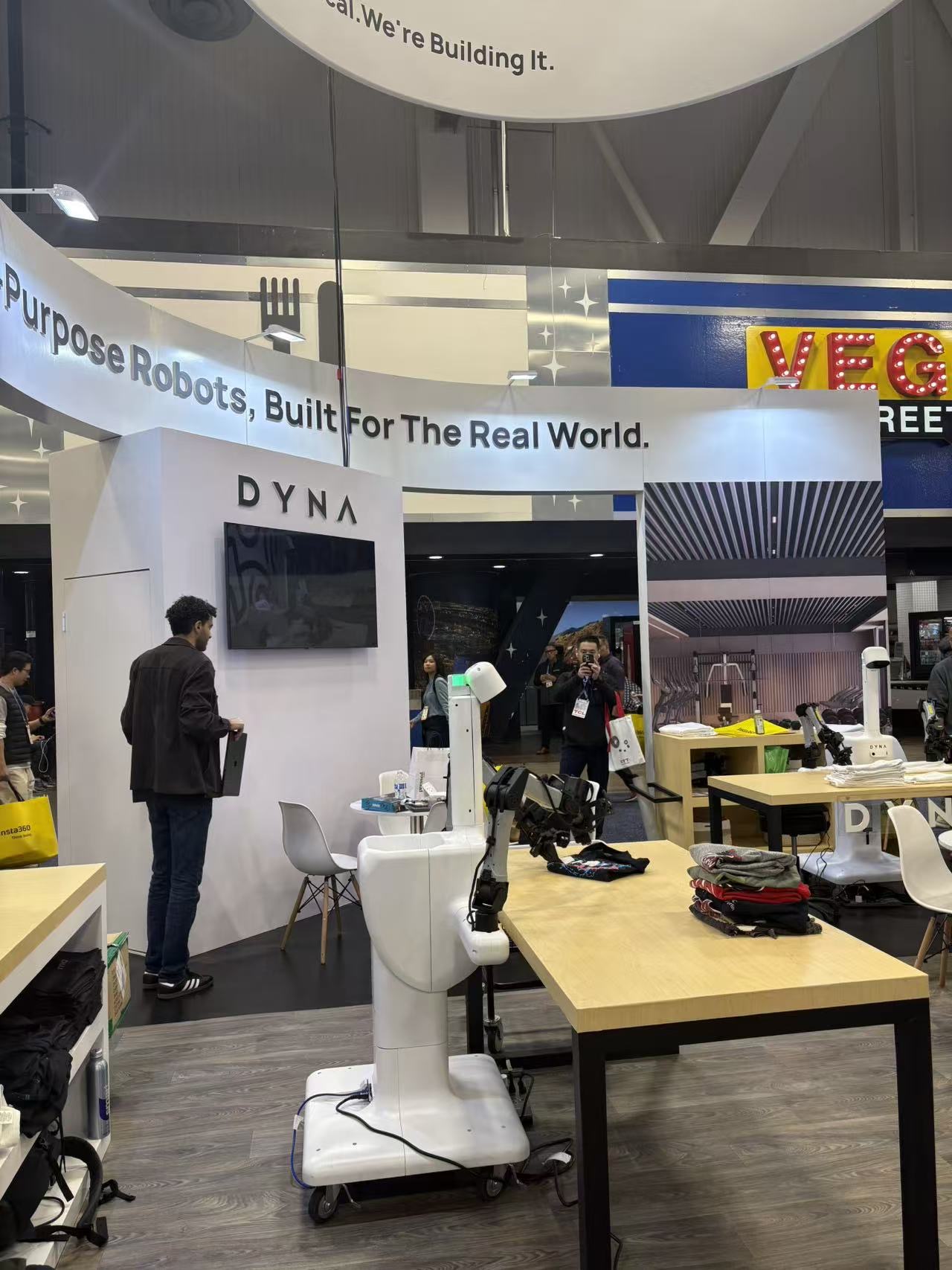
DYNA robot deftly folded clothes at CES 2026:

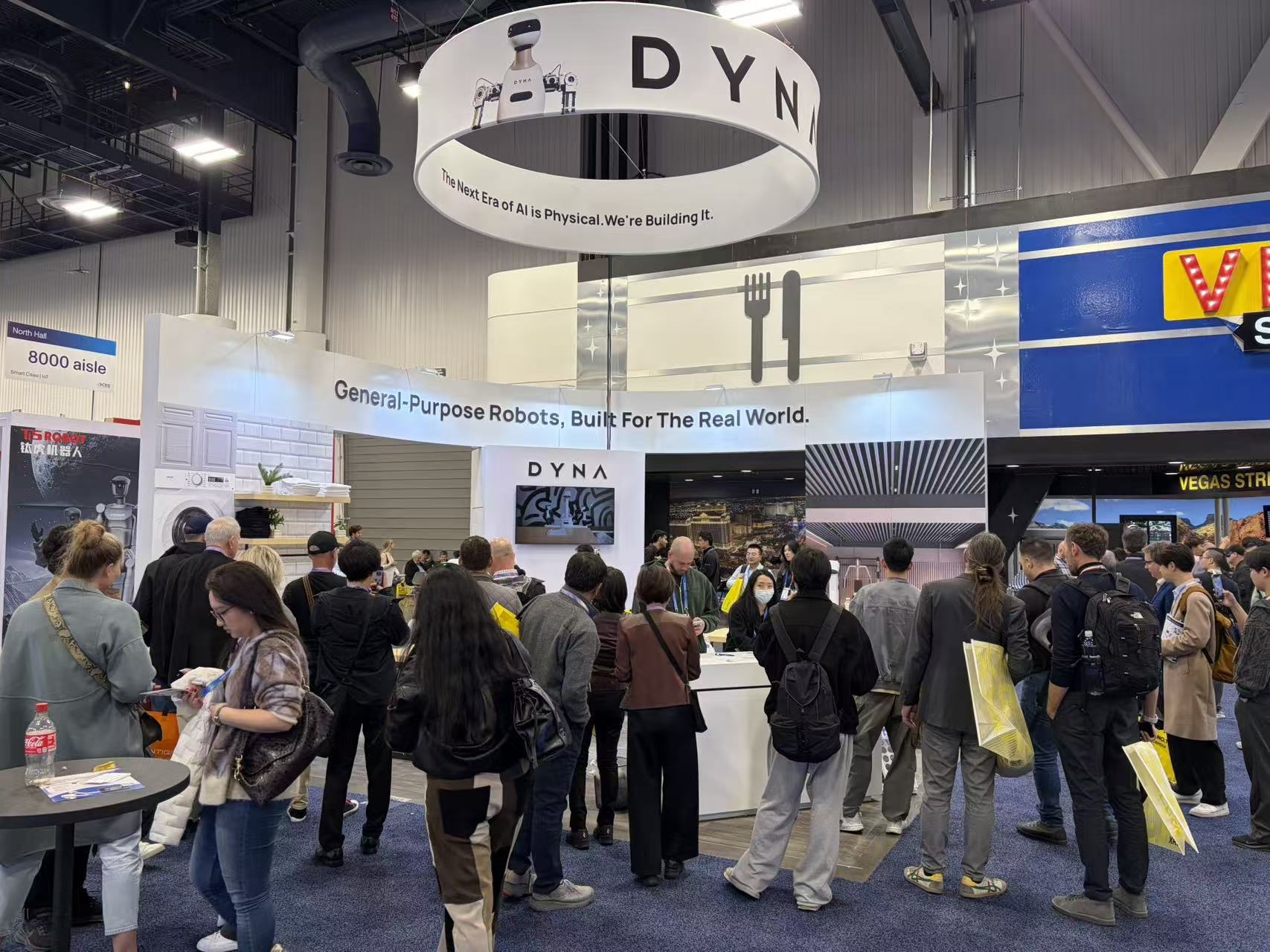
DYNA robot garnered significant attention at CES 2026:


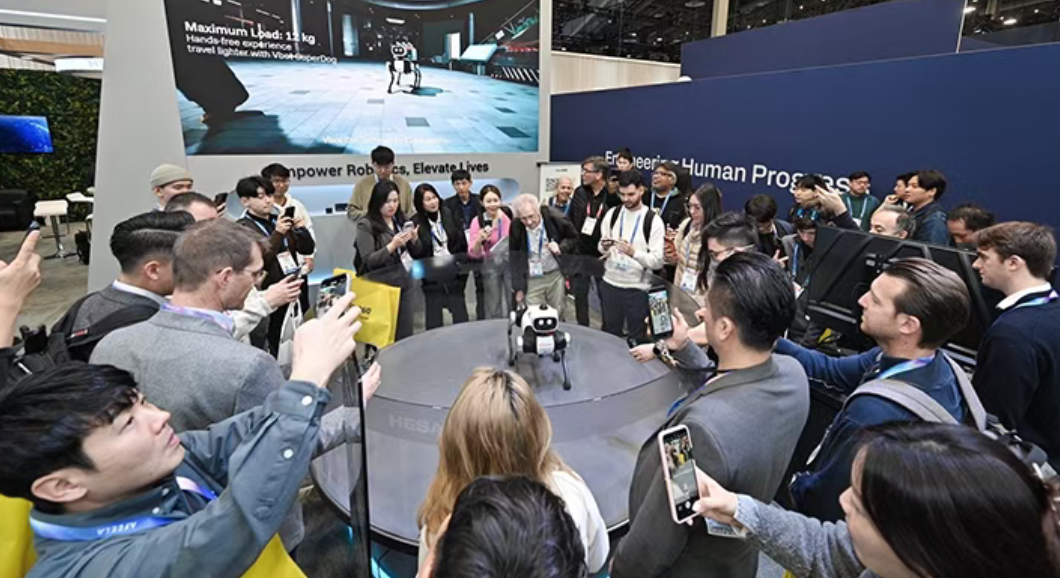
Vbot Robot Dog Debuted at CES 2026 and Awarded Best of CES
Vbot is another company INCE Capital partnered with at a very early stage. It launched China's first intelligent companion robot, featuring VLA autonomous mobility and Agent Visual Language Interaction capabilities. Without requiring a remote control, it achieves truly natural communication and closed-loop command execution, redefining the concept of a smart home companion.
Vbot Smart Companion Robot is a consumer-grade embodied intelligence product designed for home and personal users. At this year's CES, Vbot's first mass-produced robot product—the Vbot Robot Dog—made its debut appearance. This product features autonomous operation without remote control, capable of performing multiple functions across all scenarios, including following users, carrying objects, and tracking shots.
During peak visitor traffic at the exhibition hall, Vbot demonstrated the Vbot Robot Dog's natural navigation and proactive obstacle avoidance capabilities. Leveraging its robust perception system, comprehensive sensor array, and real-time inference powered by an edge AI computing platform, the Vbot Robot Dog comprehends its surroundings and precisely plans routes without remote control. Thanks to Vbot's proprietary full-scenario spatial base model, the Vbot Robot Dog possesses advanced spatial understanding capabilities.
The model decomposes visual and radar-based images and signals into geometric and semantic inputs, then performs holistic spatial understanding based on these inputs to make corresponding decisions and path planning. Its cross-modal capabilities enable it to cover quadrupedal, wheeled, or bipedal chassis robots while maintaining consistent performance at the “mobility level.”
Based on its demonstrated full-scenario capabilities and the promising prospects for consumer-grade embodied intelligence products, the Vbot Robot Dog was honored with the Best of CES award at the event. The global version of the Vbot Robot Dog is scheduled for release in the second quarter of 2026, with its initial launch targeting markets in North America, Europe, and the Middle East.

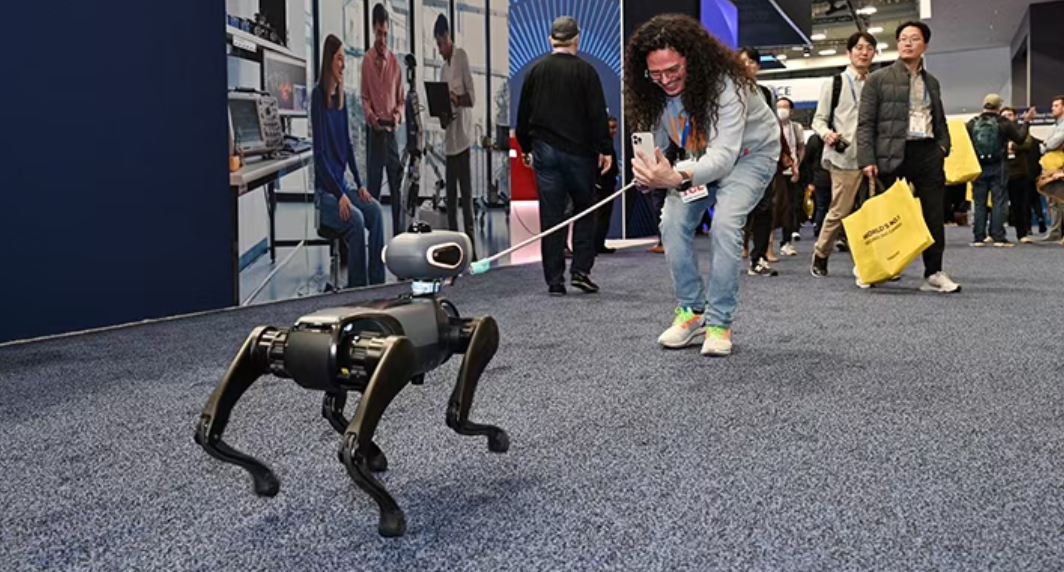
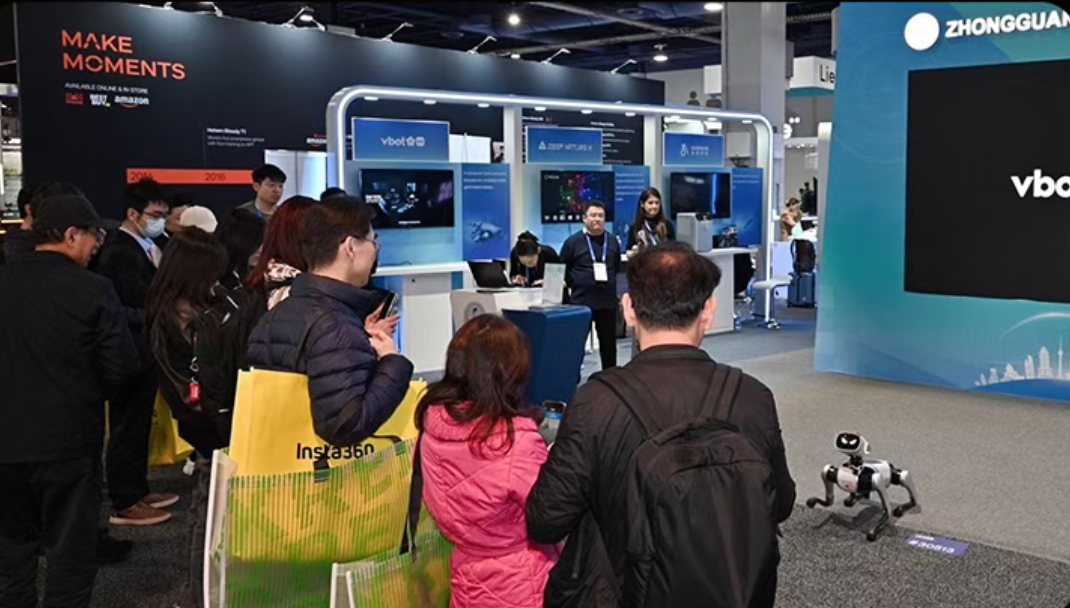
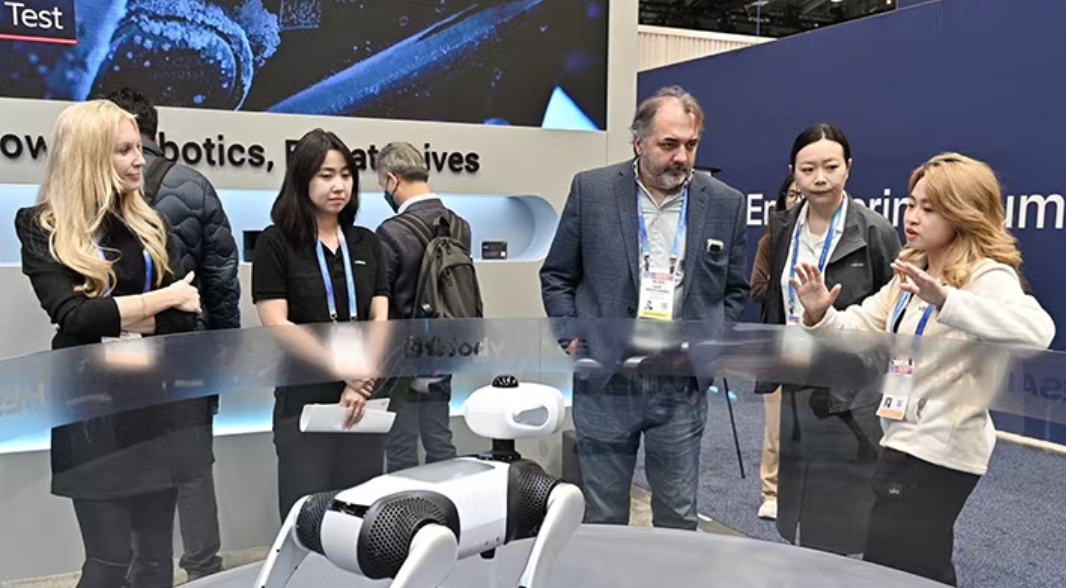
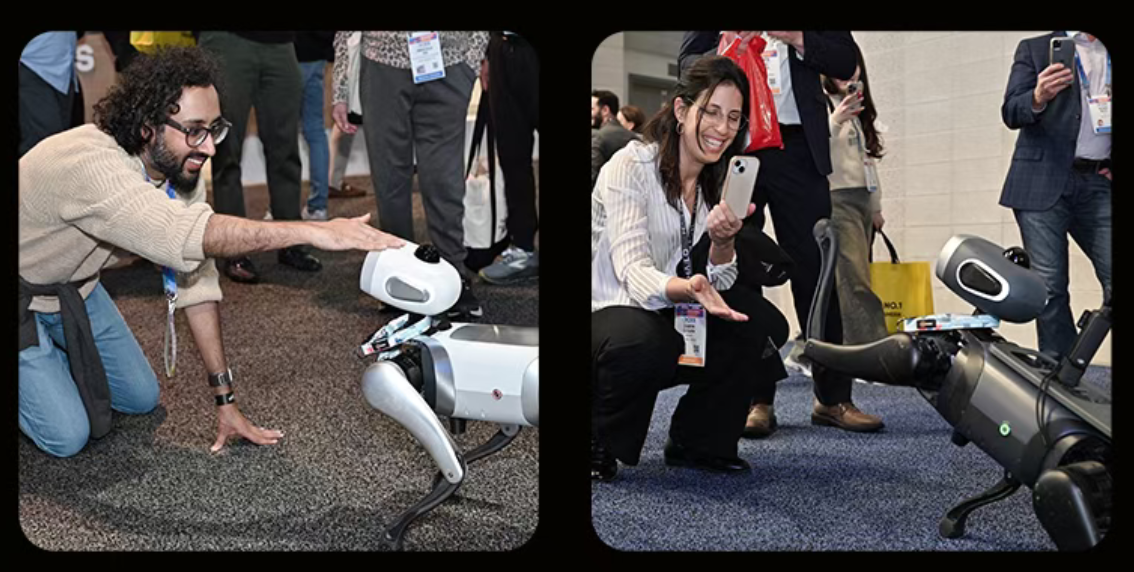
Vbot Robot Dog made its debut, drawing crowds of audience and media for hands-on xperiences:
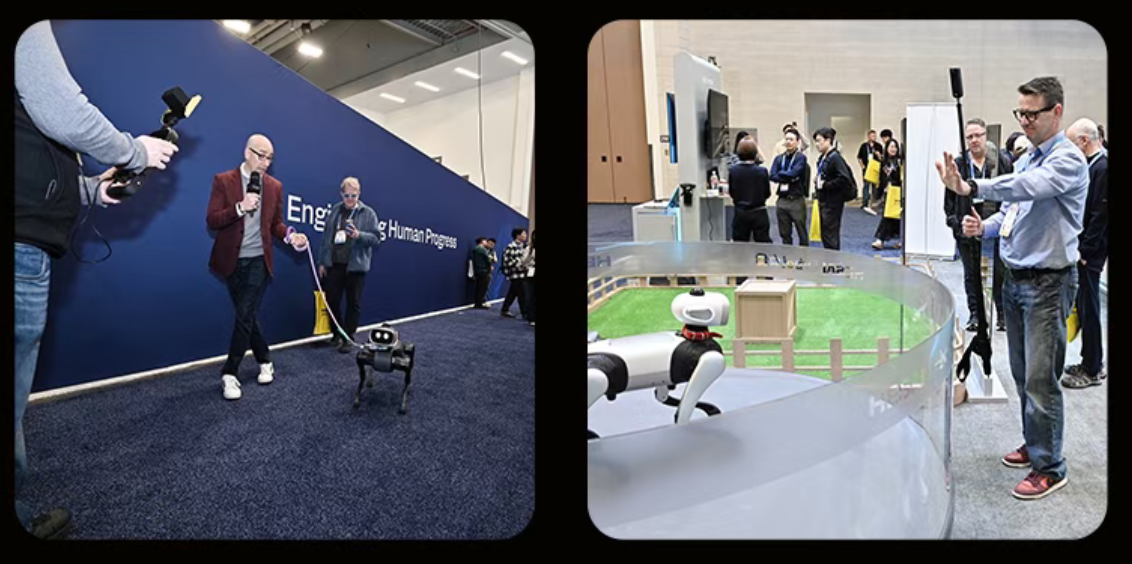
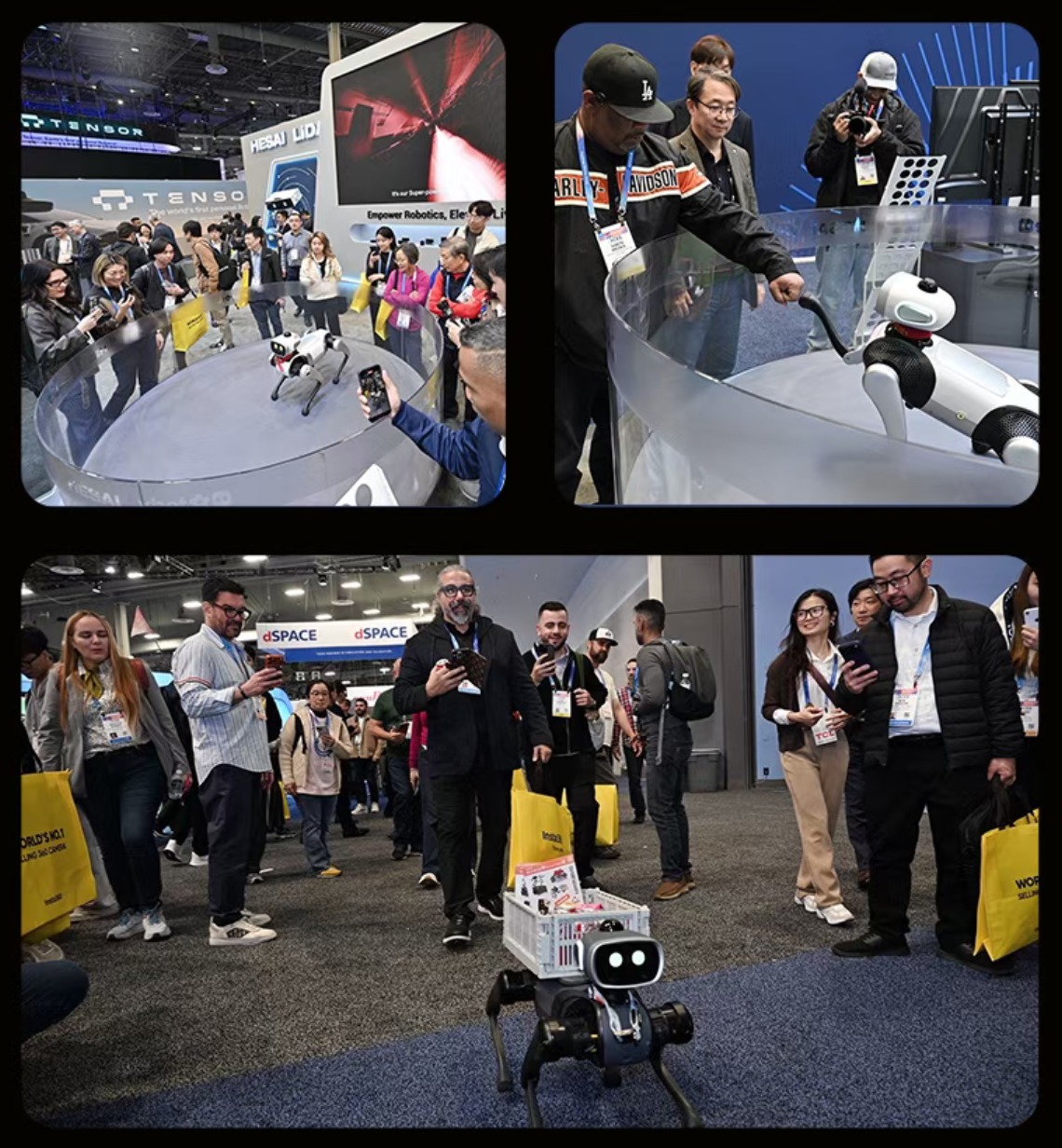
Audience experienced the robot dog's leash mode: